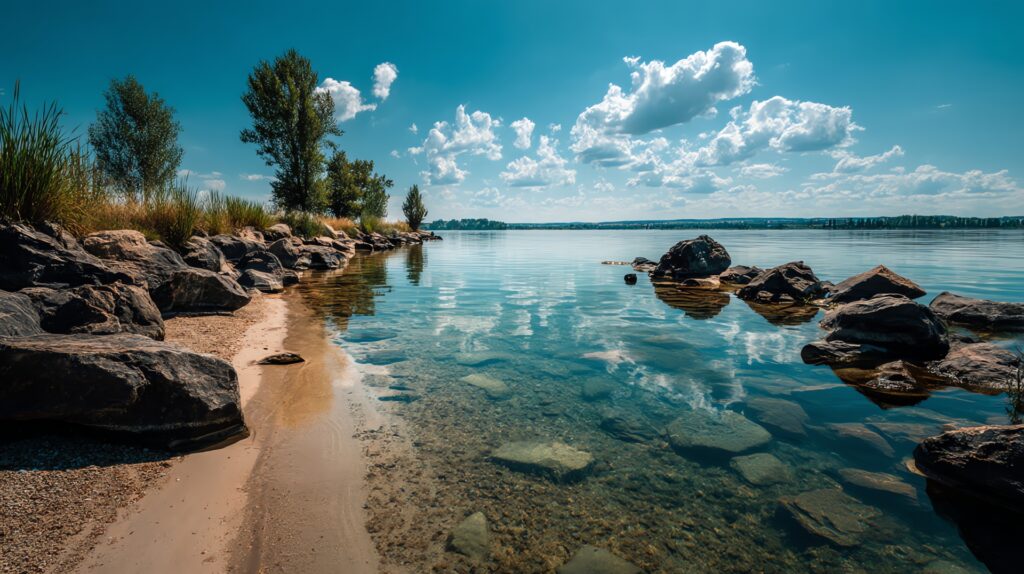
Water conditions can change faster than the view from shore suggests. This guide covers what to check before you leave and what to keep watching once you are out.
Reviewing the Forecast
Use a marine forecast rather than a general one. Marine forecasts report wind, wave height, and visibility, which are what actually affect a small vessel. Check the forecast for the full duration of your trip and look at the trend, not just the current reading.
Wind
Wind drives wave height, and wave height is usually what ends a trip early. Pay attention to wind direction as well as speed.
- Wind against current builds steeper, closer-spaced waves
- Offshore wind makes the water near shore look deceptively calm
- Rising wind through the afternoon is a common daily pattern
- An exposed crossing in building wind is harder on the way back
Thunderstorms
Storms can develop faster than you can outrun them. Watch for towering cloud build-up, darkening cloud bases, and sudden shifts in wind or temperature.
If you can hear thunder, you are close enough to be struck. Head for shelter, get passengers low and inside where possible, and stay clear of the radio antenna and metal fittings.
Visibility
Fog and heavy rain remove your ability to see other vessels and navigation marks. If visibility closes in, slow down, sound the appropriate signal, show navigation lights, and navigate by chart and compass rather than memory.
Conditions That Change
Reassess continuously. Conditions that felt comfortable on the way out may be unmanageable on the way back, particularly if the wind has swung or the tide has turned against it.
When to Postpone
Postpone when the forecast exceeds what your vessel or your crew are comfortable with, when conditions are trending the wrong way, or simply when you are unsure. The trip will still be there another day.