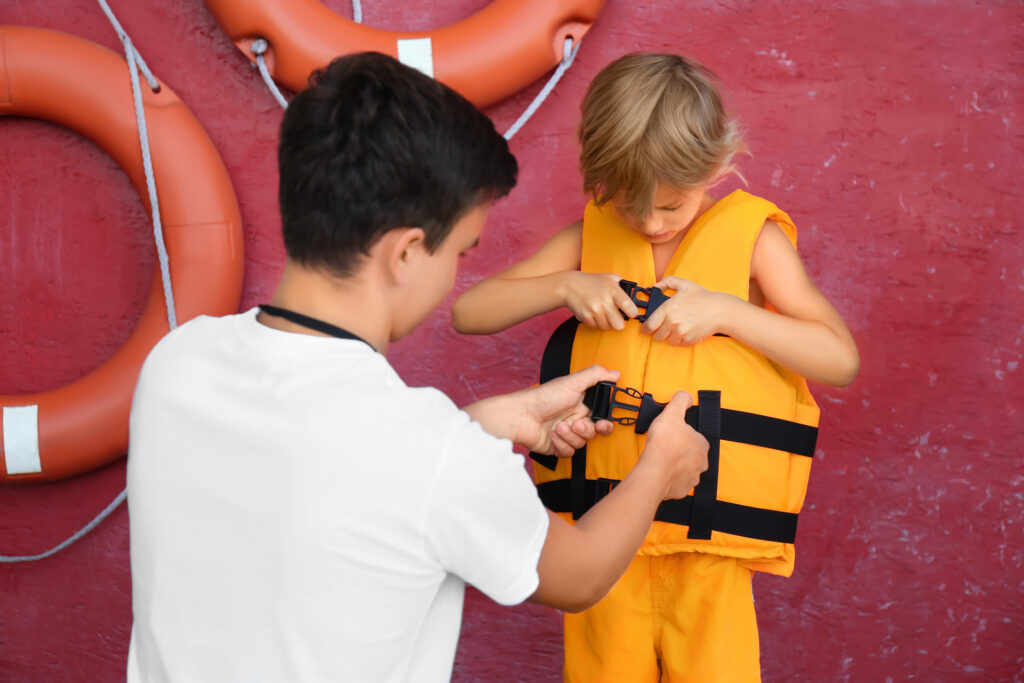
A life jacket only works if it fits and if it is being worn. This guide covers choosing the right type, checking the fit, and knowing when one has reached the end of its service life.
Choosing the Right Type
Match the jacket to the activity and the water. An offshore jacket designed to turn an unconscious wearer face-up is not the same thing as a low-profile vest intended for paddling on sheltered water.
- Consider how far from shore, and from help, you will be
- Consider how quickly rescue could realistically reach you
- Check the jacket is rated for the wearer’s weight and chest size
- Choose a jacket the wearer will actually keep on for hours
Sizing and Fit
Fit is determined by chest measurement and weight, not by clothing size. Fasten every buckle and zip, tighten the straps from the bottom up, then have someone lift the jacket firmly at the shoulders.
If the jacket rides up past the chin or ears, it is too loose or too large. A correctly fitted jacket stays in place and still allows full arm movement.
Life Jackets for Children
Children need jackets sized to their weight, with a crotch strap and a grab handle at the collar. Do not size up to leave room to grow, because an oversized jacket can slip off in the water.
Test the fit in shallow, supervised water so the child knows what the jacket feels like when it floats them.
Inspection and Replacement
- Check for tears, fraying webbing, and broken buckles
- Check that foam has not hardened, compressed, or gone brittle
- Confirm straps and stitching are still sound
- Replace any jacket that no longer holds its shape
- For inflatable jackets, check the cylinder and service the mechanism on schedule
When to Wear One
The safest answer is whenever you are on deck. Most people who drown while boating were not wearing a life jacket, and conditions rarely give enough warning to put one on once it is already needed.